Choosing classes & campsAges 1010 min read
By Charlotte ·
Grade 5 Learning Support: A Parent’s Practical Guide
Learn how to choose Grade 5 learning support that fits your child’s current schoolwork, confidence, interests, and schedule.

By fifth grade, schoolwork often asks children to hold more steps in mind, explain their thinking, read for meaning, and work more independently. A math page may involve several operations. A writing assignment may require planning, drafting, and revising. A science lesson may ask a child to observe, test, and explain—not simply remember a fact.
That can leave parents with a broad question: What kind of learning support would actually help? The answer is rarely “more work” in general. A useful next step is usually more specific: extra time with fractions, a place to practice organizing paragraphs, a discussion-based reading class, or a routine that makes homework feel more manageable.
Grade 5 learning support is not only for catching up. It can reinforce a skill that is still developing, give a child room to go deeper into a favorite topic, or offer a more engaging format for practicing something school has introduced. The goal is not to build a perfect academic plan. It is to find a sensible next class or learning experience that fits the child in front of you.
The most useful Grade 5 support starts with one clear pattern: a school topic that keeps causing friction, a skill that needs a reusable process, or an interest a child wants to explore further. Rather than choosing a broad program, look for a focused experience that gives your child room to ask questions, practice actively, and participate in a format that suits the goal. One well-matched class or simple home routine can be a more encouraging next step than trying to address every subject at once.
Start with the pattern, not a label
It is tempting to summarize a hard week with a big label: “My child is bad at math,” “They hate reading,” or “They need tutoring.” But those labels can hide the useful details. Before looking for support, try to notice the pattern behind the challenge—or the interest.
A few calm observations can point you toward a much better match:
- Which assignments take much longer than expected?
- Where does your child ask for help, become unsure, or lose their place?
- What can they do confidently when the task is broken into smaller parts?
- What school topic do they keep talking about after class?
- Would they benefit most from explanation, guided practice, discussion, structure, or a new challenge?
For example, “math is hard” may actually mean that a child understands single-step problems but gets stuck when fractions appear in multi-step questions. “Writing is frustrating” may mean they have plenty of ideas but do not yet have a dependable way to turn those ideas into organized paragraphs. Those are different needs, and they call for different kinds of support.
Looking closely also helps keep strengths in view. A child might need more practice with reading comprehension while being wonderfully curious about science. Another may feel comfortable with math but want help getting started on longer projects. Support can be targeted to one area without turning every part of learning into a problem to solve.
What often changes in Grade 5?
Every child develops on their own timeline, and school expectations vary. Still, fifth grade often brings a shift toward work that has more layers. Children may be asked to use skills together rather than one at a time: read a passage, identify key details, make an inference, and support an answer with evidence; or solve a problem, choose an operation, show the steps, and check whether the answer makes sense.
Common areas where a focused learning experience can be useful include:
| Area | What a child may be practicing | What helpful support can look like |
|---|---|---|
| Math | Fractions, decimals, multi-step problems, explaining reasoning | Guided practice, visual models, time for questions, and feedback on process |
| Reading | Summarizing, vocabulary in context, inference, evidence-based responses | Small-group discussion, close reading, and conversation about ideas |
| Writing | Planning, paragraph organization, clear sentences, revision | A repeatable writing process with drafting and constructive feedback |
| Study habits | Starting tasks, breaking down directions, keeping track of materials | Simple routines and strategies applied to real schoolwork |
| Science and enrichment | Asking questions, observing, testing ideas, communicating findings | Hands-on investigation that connects curiosity with explanation |
The important point is that a child does not need support in every row. One well-chosen focus can be more manageable—and more encouraging—than adding a broad program that does not connect to a real need or interest.
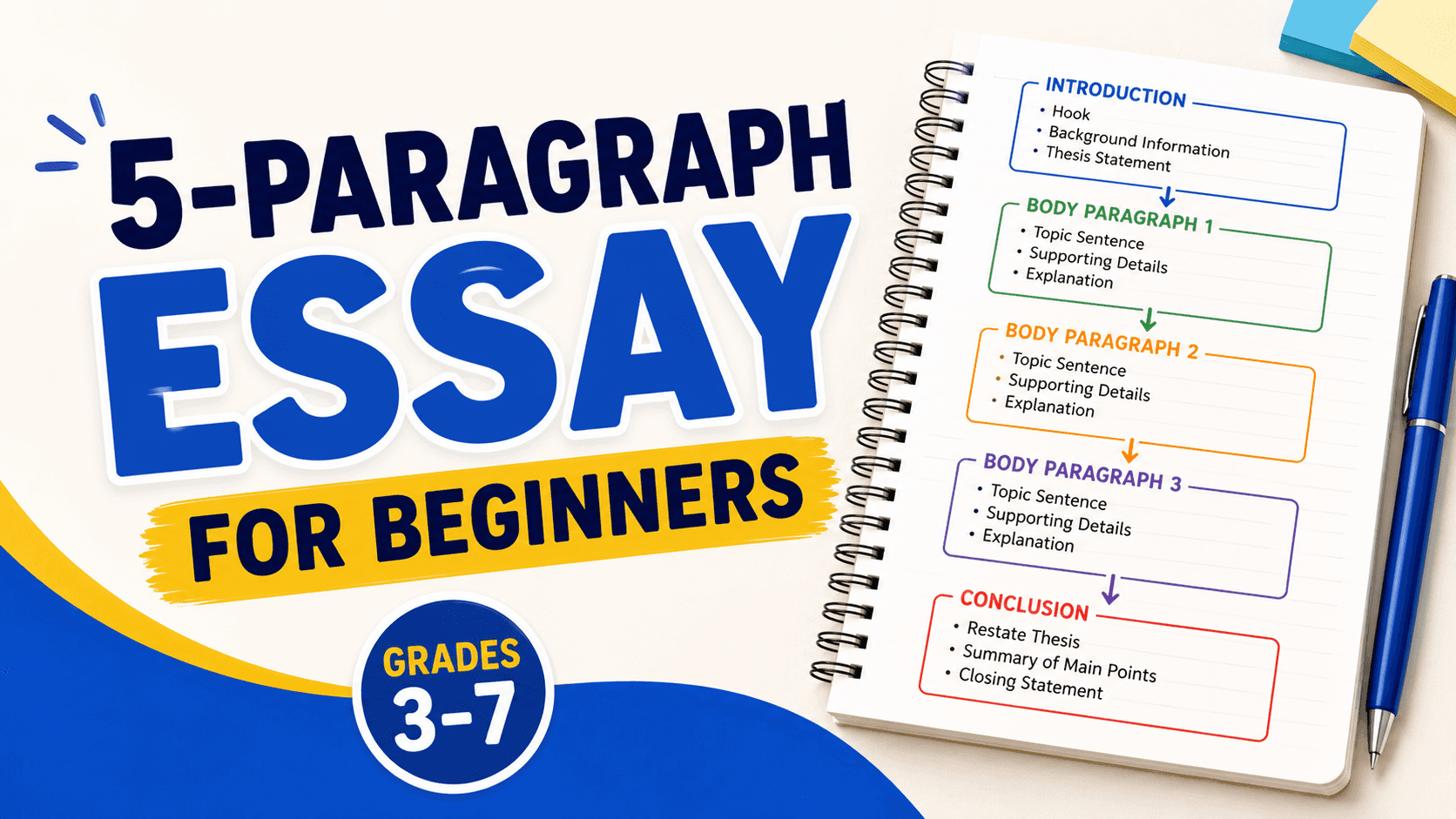
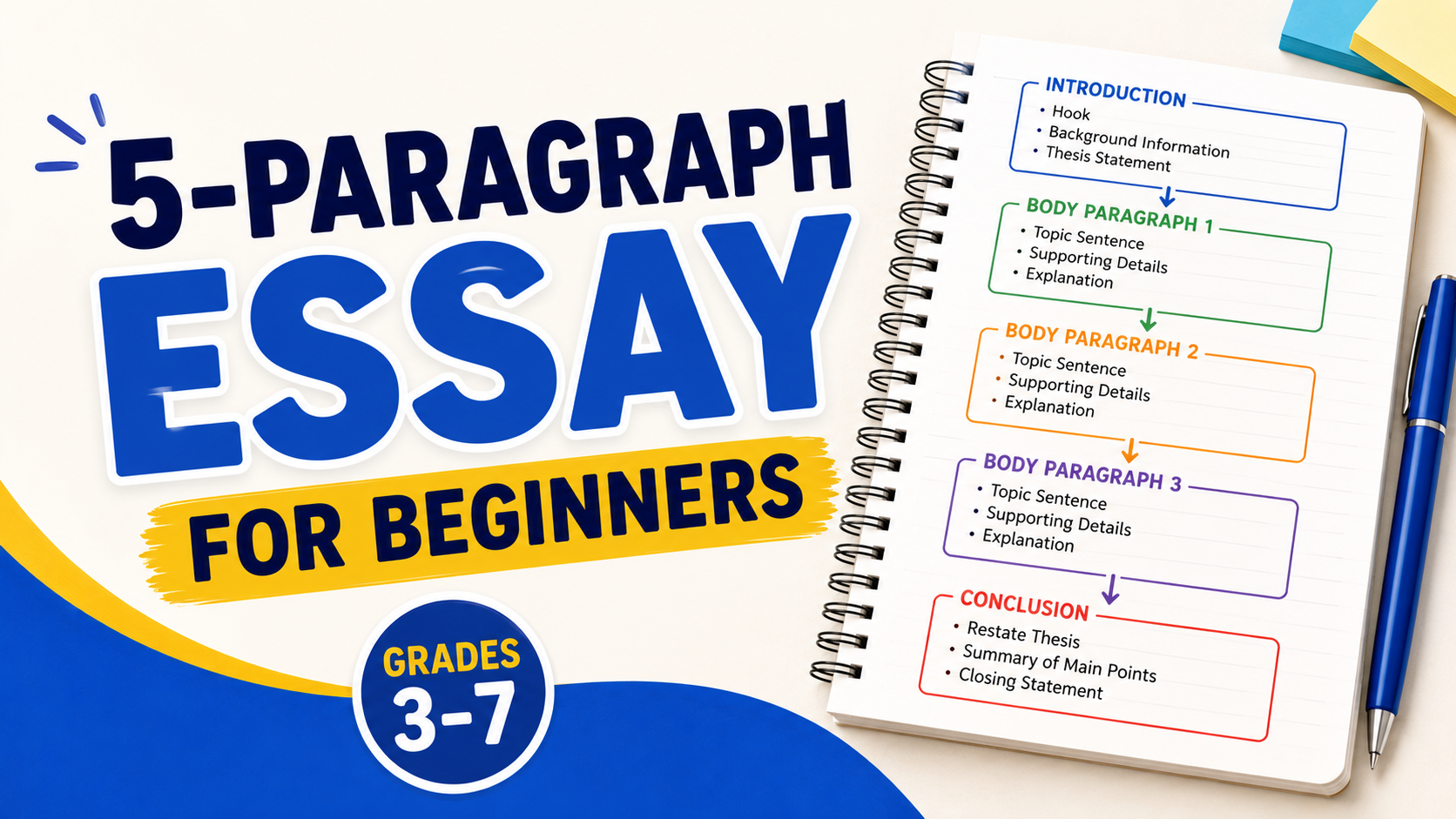 A live class on thisFive-Paragraph Essay FundamentalsAges 8–12
Choose the kind of support based on the goal
Once you can describe what is happening, decide what you hope a class or learning experience will provide. The same subject can serve very different goals.
Reinforce a current school topic
This is a good fit when a particular unit keeps coming up at home. Perhaps your child follows the math lesson at school but needs additional guided practice with multi-step fraction problems. Or perhaps a reading assignment leads to repeated questions about what the author is implying.
Look for a focused class that gives children a chance to ask questions, practice actively, and receive clear feedback. The aim is not just to finish tonight’s assignment; it is to spend enough time with the underlying skill that the next similar task feels more familiar.
Build a foundational skill
Sometimes the immediate assignment is only the place where a broader skill becomes visible. A child who struggles to begin written responses may benefit from learning how to brainstorm, make a simple outline, and turn each main idea into a paragraph. A child who rushes through directions may benefit from strategies for identifying the task, listing the steps, and checking work before turning it in.
Classes focused on writing organization, reading strategies, problem-solving, or study habits can be especially useful when the goal is a process the child can reuse across subjects.
Extend an interest
Extra learning can also be a positive outlet for a child who wants more of a subject they already enjoy. A curious reader may appreciate a literature discussion or creative writing class. A child who loves asking how things work may enjoy an age-appropriate science investigation. These experiences can offer challenge without presenting learning as correction or extra pressure.
Find a format that feels different from the school day
Sometimes the subject is not the only factor. A child may respond well to a smaller discussion, a project-based activity, a live class with a chance to speak up, or a short series centered on one clear goal. When considering options, think about whether the format gives your child a productive way to participate rather than simply adding another worksheet.
A quick Grade 5 support checklist
You do not need to answer every question perfectly before choosing a class. This checklist can help you narrow the search.
- Name one current goal. Keep it concrete: understanding fractions, organizing an essay, discussing books more deeply, or creating a homework routine.
- Look for the skill underneath. Is the challenge mainly conceptual understanding, practice, confidence with a process, attention to directions, or a need for a new challenge?
- Ask what kind of participation would help. Would your child benefit from talking through ideas, making something, solving problems with guidance, reading and discussing, or practicing independently between sessions?
- Consider what already works. A class is more likely to feel worthwhile when it connects to a child’s existing interests, strengths, or preferred ways of engaging.
- Keep the time commitment realistic. With school, activities, family routines, and rest, a focused option may be more sustainable than an overloaded schedule.
- Review after a few sessions. Notice whether the class feels understandable, appropriately challenging, and worth continuing. Adjusting is part of finding a fit.
What to look for in a fifth grade class
Grade level is a useful starting point, but it is not the whole story. Children of the same age can have different readiness levels, interests, schedules, and comfort with a subject. A strong fit is usually one where the child can participate meaningfully while still encountering something new.
As you review class descriptions, these questions can be helpful:
Is the class centered on a specific skill, topic, or project?
Will children have chances to ask questions and try the skill themselves?
Does it match the goal: practice, discussion, creation, investigation, or enrichment?
Does it seem approachable without being overly repetitive, and can it fit into your week?
Would your child recognize something appealing about the topic or activity?
A child who has strong ideas but has trouble arranging them on the page, for instance, may be better served by a writing class centered on planning and drafting than by a general class that covers many unrelated language arts topics. Likewise, a child interested in science may enjoy a class that makes room for observation, experimentation, and explanation—not just science facts to memorize.
Keep home support simple and connected
A class can be a useful part of support, but home routines matter too. The most helpful routines are usually small enough to repeat. Rather than attempting to reteach every lesson, try to create a calm bridge between school and the next learning step.
Depending on your child’s needs, that might mean:
- Asking, “What is the first step?” instead of jumping straight to the answer.
- Having your child explain a math strategy aloud or draw a quick model.
- Using a short planning sheet before a writing assignment.
- Pausing after a reading section to ask what changed, what mattered, or what evidence supports an idea.
- Choosing one consistent time and place for checking assignments and materials.
Keep the tone curious. If a homework challenge becomes frequent or unusually discouraging, it can be useful to share specific observations with your child’s teacher. If you have concerns about a possible learning difference, a class should not replace a conversation with appropriate school or health professionals. Focused learning support can complement school, but it is not a diagnosis or professional evaluation.
What parents can do next
Fifth grade is a good time to notice how your child learns, what they enjoy, and which strategies help them work more independently. It is not necessary to solve every future academic need at once.
- Choose one current schoolwork pattern or interest to pay attention to this week.
- Name the underlying goal, such as fraction practice, paragraph organization, reading discussion, or a steadier homework routine.
- Consider which kind of participation would help most: guided practice, discussion, creating, investigating, or a focused project.
- Choose a manageable next step, then notice what feels useful before adding more.
One class that matches a current goal can be a meaningful place to start: a focused math session for fraction practice, a writing workshop for organizing ideas, a book discussion for an eager reader, or a science class for a child who wants to investigate more deeply. From there, you can notice what feels useful and make the next choice with more information.
Find Grade 5 learning experiences
Undoschool lets families explore Grade 5 learning experiences by subject, skill, and interest, so parents can begin with what matters to their child right now rather than assuming every fifth grader needs the same kind of support.