


Introduction & Historical Context

Introduce Rachel Carson, the book’s purpose and the choice to begin with a fable to set tone and context.
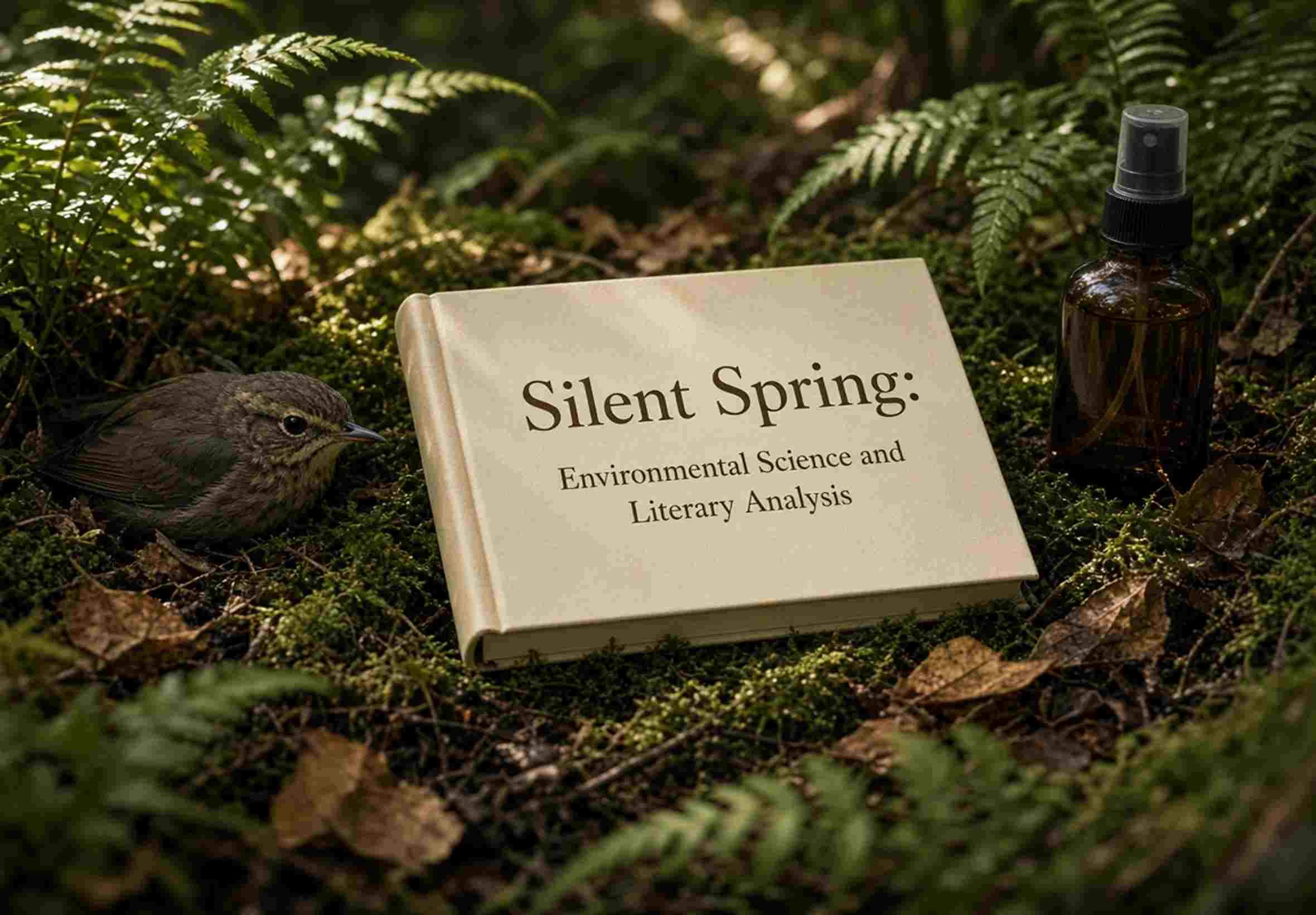
This course offers a chapter-by-chapter study of Silent Spring, combining scientific context with literary analysis. Students examine pesticide toxicity, ecosystem interconnectedness, and historical impacts while discussing Carson’s use of evidence and rhetorical strategies and relating the book’s themes to contemporary environmental issues.
This course offers a chapter-by-chapter study of Silent Spring, combining scientific context with literary analysis. Students examine pesticide toxicity, ecosystem interconnectedness, and historical impacts while discussing Carson’s use of evidence and rhetorical strategies and relating the book’s themes to contemporary environmental issues.

Analyze Carson’s arguments and literary techniques in Silent Spring
Explain ecological concepts such as ecosystem interconnectedness, biodiversity, and pollutant effects
Evaluate ethical and policy implications of pesticide use and environmental decision-making
Book: Silent Spring by Rachel Carson Journal: Notebook/Journal
A step-by-step plan of what your child learns, class by class. · 18 Weeks
Introduce Rachel Carson, the book’s purpose and the choice to begin with a fable to set tone and context.
Examine chemical pesticides, persistence, toxicity, and how language frames environmental risk.
Explore effects of pollutants on surface and underground waters and aquatic ecosystems.
Discuss impacts on bird populations and the symbolic role of silence in Carson’s argument.
Analyze airborne pesticide application, exposure pathways, and long-term accumulation in organisms.
Study growing public concern, Carson’s alternatives to chemical dependence, and the book’s lasting influence.
Next 7 days, US Eastern Time
New class, no reviews yet
Be one of the first families to join. Parents can leave a review after their first class.
Not satisfied after the first class? Full refund.
K. M.
Beginner
Level
13–18
Ages
55 min
Duration
1 / Week
Classes
14
Weeks

Y. C.
Beginner
Level
14–18
Ages
45 min
Duration
1 / Week
Classes
10
Weeks

Y. C.
Beginner
Level
11–16
Ages
45 min
Duration
1 / Week
Classes
8
Weeks

G. S.
Beginner
Level
11–14
Ages
20 min
Duration
2 / Week
Classes
10
Weeks
V. R.
Beginner
Level
8–13
Ages
40 min
Duration
1 / Week
Classes
7
Weeks
Usha M.
Beginner
Level
14–16
Ages
50 min
Duration
1 / Week
Classes
13
Weeks
M. N.
Advanced
Level
15–18
Ages
50 min
Duration
1 / Week
Classes
3
Weeks

Krishna C.
Beginner
Level
8–10
Ages
90 min
Duration
5 / Week
Classes
8
Weeks